Building in the Clouds ☁️
In Aloft, the wind isn’t just part of the scenery, it’s the beating heart of survival. Your structures, tools, and even your island’s movement all depend on harnessing airflow effectively.
Mastering wind power is what separates a simple floating hut from a fully functional flying fortress. Here’s how to design, power, and optimise your island like a true sky engineer.
1. Start with a Solid Foundation 🪵
Before you go wild with sails and turbines, make sure your island can handle the weight.
- Use Wood Beams and Supports to create a stable platform
- Keep your core structures centred to maintain balance
- Reinforce long bridges or upper decks with angled beams
Pro Tip: Build around your island’s core rock mass, it provides the most stability for heavy machinery later.
2. Learn the Language of the Wind 🌫️
The wind direction in Aloft constantly shifts. Understanding it is key to efficient design.
- Look for floating particles or flags to gauge direction
- Build wind compasses for accurate readings
- Plan your structures so sails and windmills always face open air
Bonus Tip: Avoid placing wind structures near tall walls, blocked airflow reduces efficiency dramatically.
3. Build Your First Sails ⛵
Sails are the earliest form of wind harnessing.
- Use Wood, Cloth, and Rope to craft basic sails
- Mount them on rotatable joints for adjustable positioning
- Connect them to winches or anchors for mobility
You’ll unlock Advanced Sails later, which can move your island or power mechanical contraptions.
4. Upgrade to Windmills and Turbines ⚙️
Once your base expands, it’s time to convert raw wind into usable power.
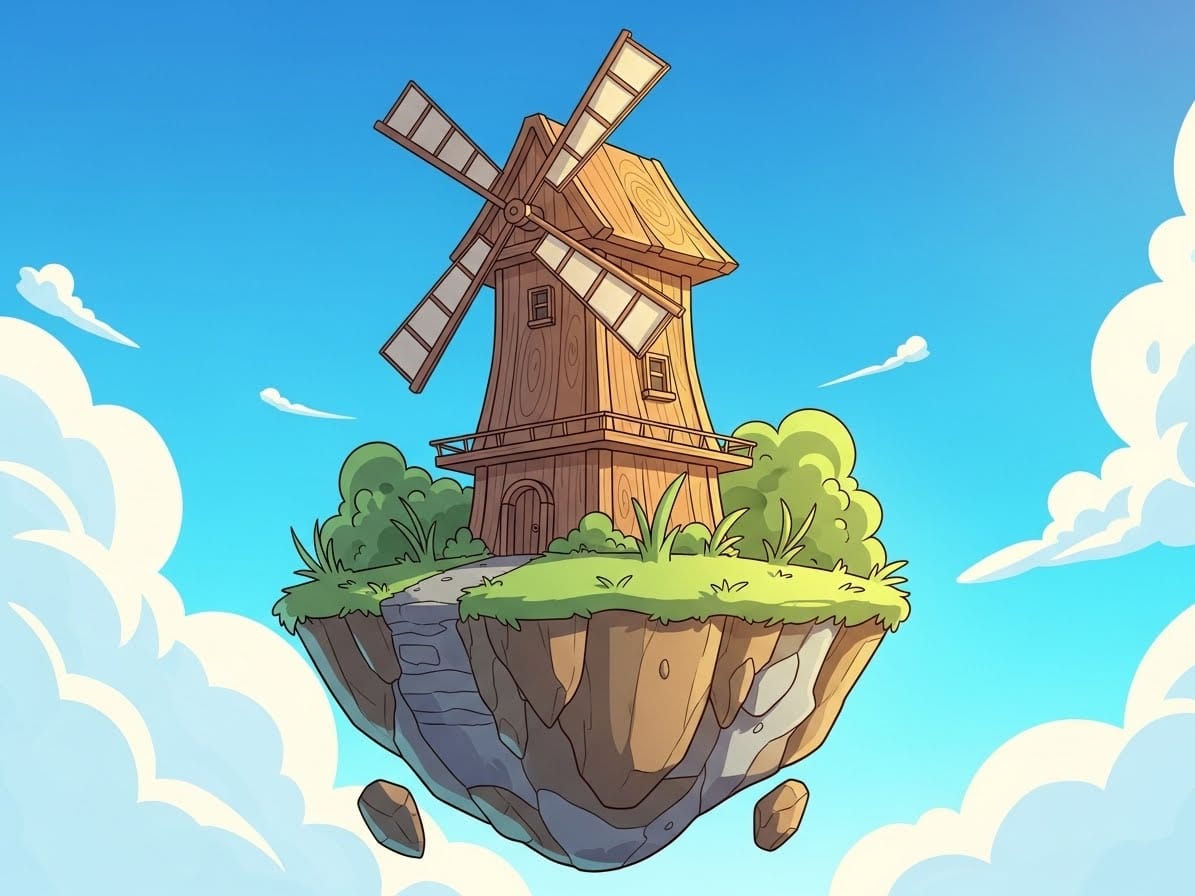
- Windmills generate steady rotational energy
- Turbines output higher power but require careful alignment
- Place multiple mills at varying heights to catch different wind layers
Pro Tip: Build elevated towers, wind flow is stronger higher up, especially during storms.
5. Powering Your Island 🔌
Connect turbines and sails to machines using the island’s wind grid system.
- Power Crafting Stations, Workbenches, and Lights
- Store excess energy in battery nodes
- Use switches or levers to reroute power efficiently
Keep your circuits simple. Overloading your network with too many connections can reduce output and cause instability.
6. Designing Efficient Bases 🏗️
The most successful sky bases balance form and function.
- Keep wind structures on outer decks or towers
- Store heavy materials near the island’s centre
- Leave open airflow paths between structures
Aloft rewards smart design, well-planned layouts look stunning and perform better under changing conditions.
Bonus Tip: Combine wind power with glider docks and elevators to create seamless, moving sky hubs.
7. Weather and Maintenance 🌪️
Storms can both help and harm your systems.
- Wind speeds increase during storms, use that boost for crafting
- But strong gusts can damage sails or tilt structures
- Inspect machinery regularly and repair damaged components
If you’re hosting a shared world, schedule maintenance breaks, nothing kills immersion like your windmill flying off mid-storm.
8. Go Fully Mobile 🚀
Once your island is well powered and balanced, you can take to the skies.
- Install directional sails or thrusters
- Adjust ballast and weight for stability
- Use control stations to steer your island across biomes
This is the pinnacle of Aloft engineering, turning your base into a skyship that drifts wherever the wind calls.
Final Thoughts 💨
In Aloft, mastering wind power is mastering life itself. The sky rewards creativity, balance, and understanding of natural forces. With smart building and steady maintenance, your island can become a floating paradise, efficient, mobile, and unstoppable.
With ChipHead hosting, your airborne adventures run smoother than a breeze. Our servers deliver stable co-op sessions, fast save syncing, and the performance you need to keep your sails full and your turbines spinning. ⚡☁️